Institute of Information Systems
Instituteof Information
Systems
Systems
Photo: UHH/Denstorf
11 July 2026, by Kai Brüssau
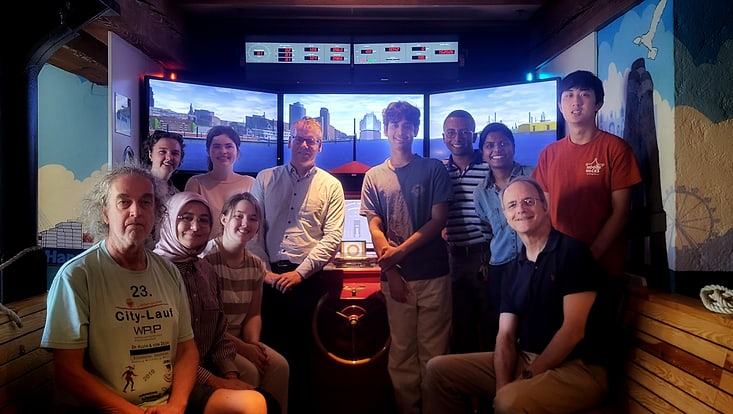
Photo: Shi/UHH
The IRES-students successfully finished their research stay.
The research stay of our guests concerning the IRES projects has now come to a successful end. IRES enters its next phase.
IWI has been host to seven US students between June 1 and July 9, 2026. During this period the students worked on different research topics in groups of twos and threes and visited important companies and museums in Hamburg. The highlights were the visits to Airbus and Eurogate as well as the International Maritime Museum and the Miniaturwunderland in the Speicherstadt, Hamburg's warehouse district.
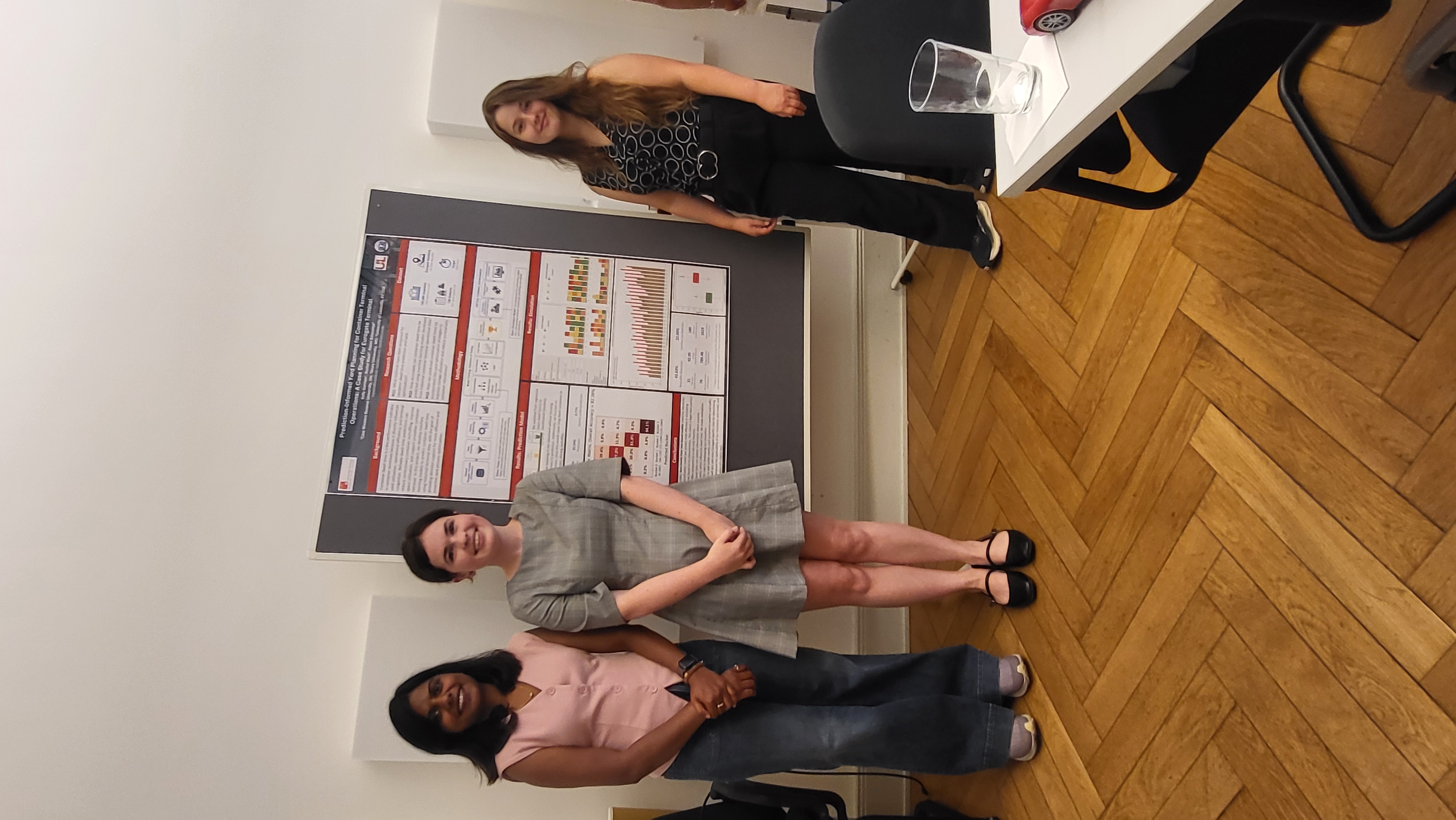
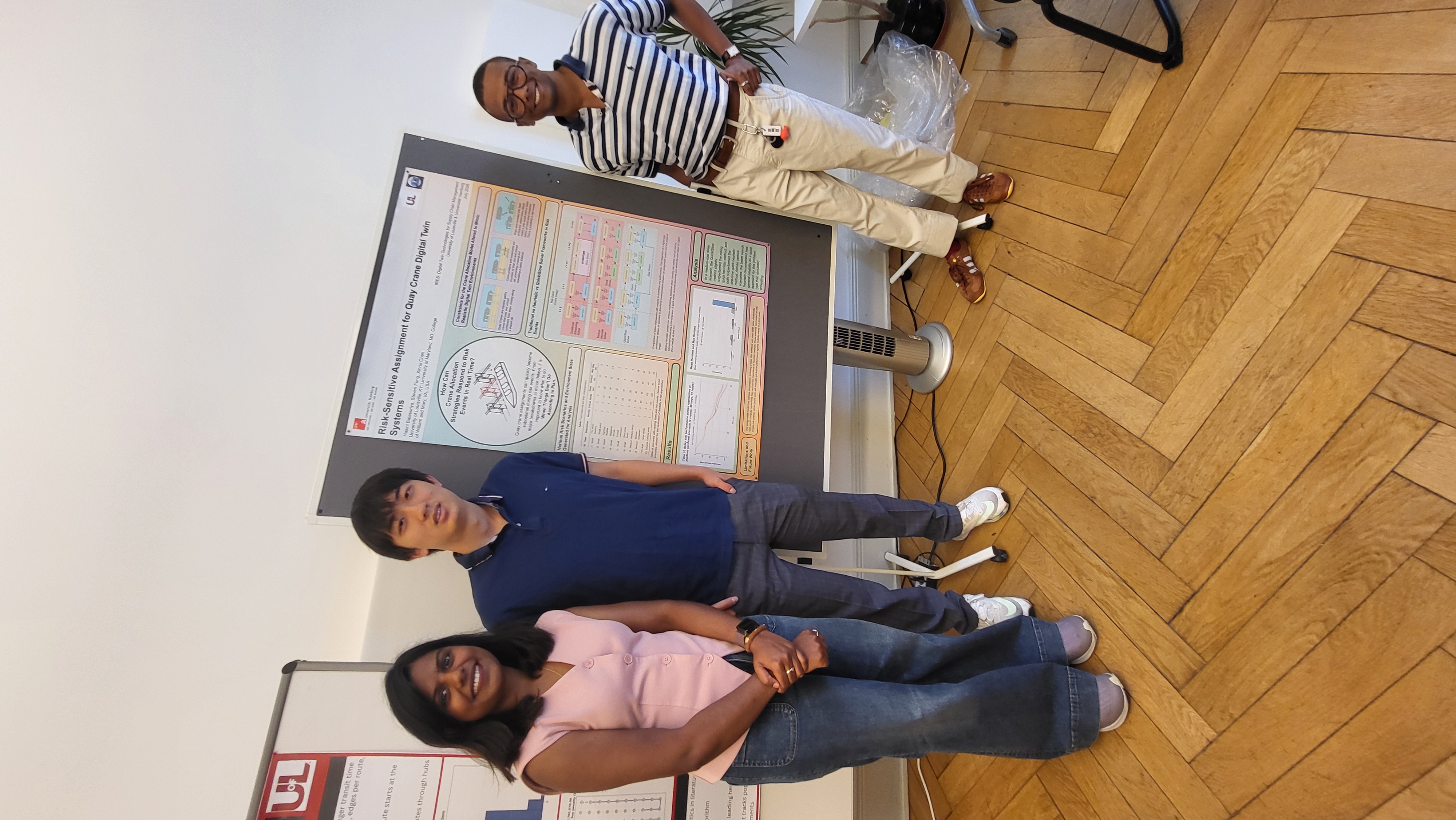
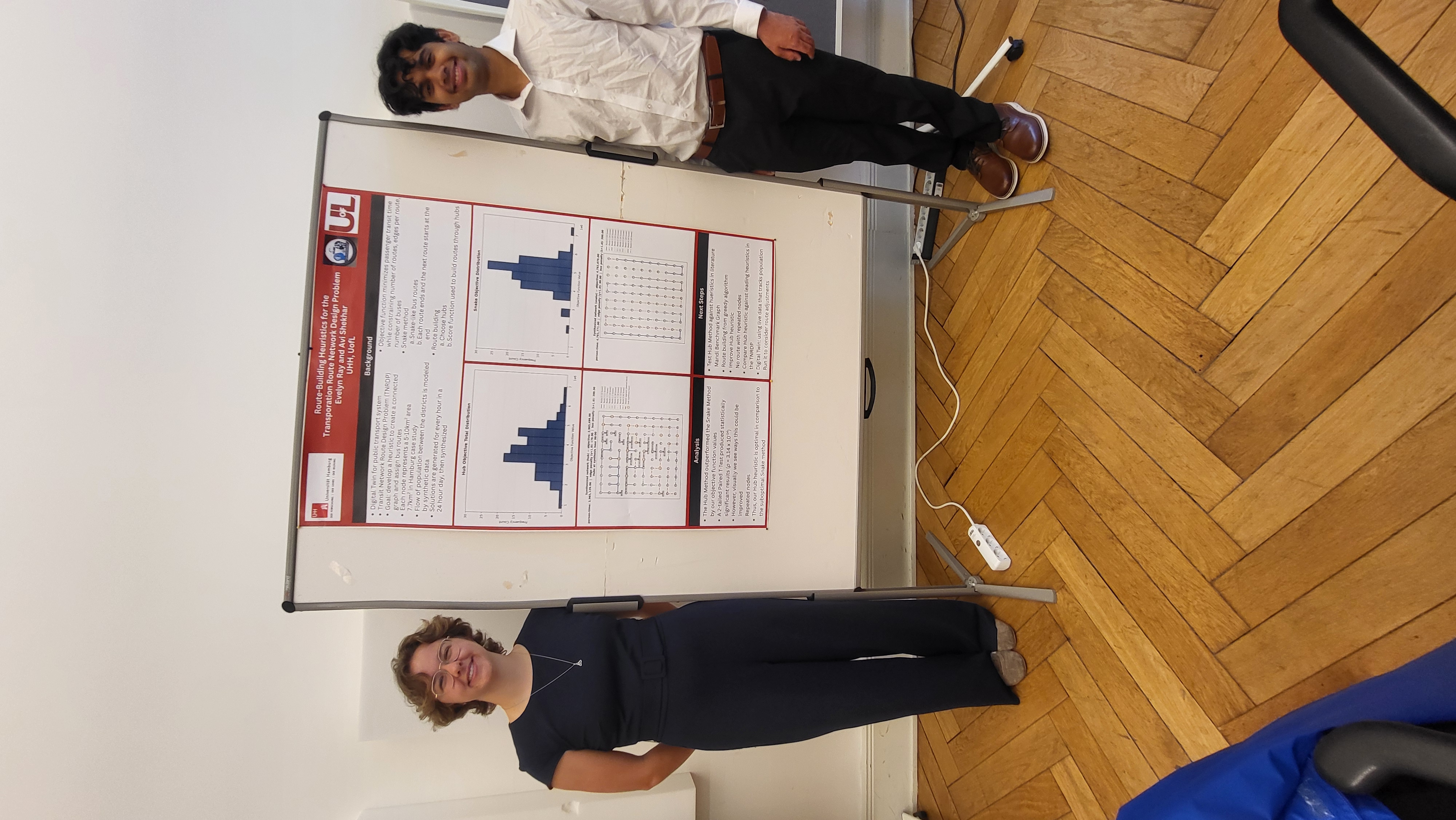
The students presented their research outcomes on posters in a workshop on July 7, 2026.
One of the groups is working on a dwell-time forecast for containers on terminals, e.g. Eurogate. As the pick-ups of import-containers often stay unscheduled and the containers have to be stored temporaily in the yard, a sound dwell-time forcast is important for choosing the right storage location, i.e. to solve the question which container can be stored on which stack of other containers in order to keep the total number of container re-locations low during its pick-up. The forecast results have been integrated in a simulation for evaluating their impact on storage locations and necessary contaienr re-locations. The so-created digital twin can help in supporting operative processes on the terminal.
Another group is optimizing the assignment of quay cranes to ships so that loading and unloading can be carried out as efficiently as possible. Exceeding a specified handling time for a ship can result in the ship having to depart before all containers have been loaded or unloaded. Naturally, this should be avoided under normal circumstances. Disruptions due to weather conditions, crane failures, and other delays make it necessary to revise the schedule in such cases. As part of the study, various methods for carrying out the planning were examined, and it was demonstrated how the respective replanning can be performed. Exact mathematical methods as well as metaheuristics were used for this purpose. Within the framework of a digital twin, these results can also be utilized for operational use in a container terminal.
The third group focuses on the layout planning of a bus network. To this end, passenger flows—which were initially generated synthetically—are represented in a graph. Using various algorithms, bus routes are then generated so that passengers can reach their destinations as quickly as possible (in terms of travel times and transfer times). In addition, the effort required to set up a route must also be taken into account. This model can be used both for the initial development of a bus network and for making changes when, for example, different routes are advantageous due to construction sites or changes in passenger flows. It is also possible to integrate social aspects, such as assigning greater importance to certain regions (nodes) because the population groups living there rely more heavily on public transportation.
Overall, the students will continue working on their topics in the United States. The University of Louisville will host another workshop on this topic in late July, and Dr. Kai Brüssau and Dr. Robert Stahlbock will continue to supervise the projects in close collaboration with the students. The goal is to present the final results at an academic conference and/or publish them in an academic journal.