University of Hamburg Business School
University of HamburgBusiness School
Photo: UHH/Denstorf
12 May 2026
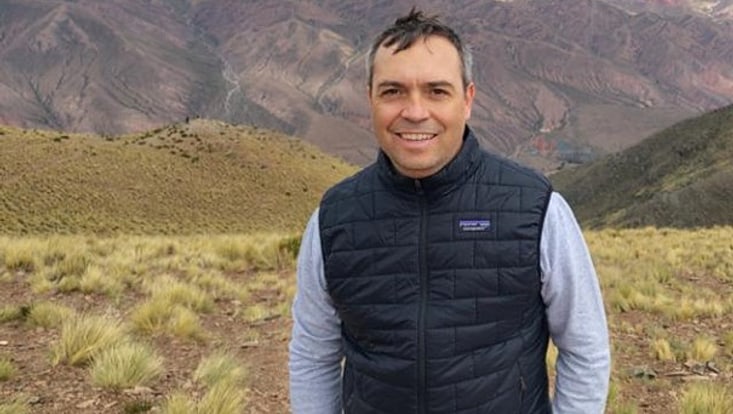
Photo: Universidad Austral / IAE Business School
Prof. Gonzalo Patron Costas is a guest researcher from Argentina who spends three months at the professorship of Wolfgang Drobetz. Read more about him and his expertise in our interview.
Gonzalo Patron Costas, a Professor of Management Control Systems at Universidad Austral in Buenos Aires, Argentina, is serving as a visiting researcher—from April 1 to June 30—at the University of Hamburg Business School, collaborating with the professorship of Corporate Finance and Asset Management held by Prof. Wolfgang Drobetz. In this interview, he discusses the topics he is currently investigating and the objectives of his visit.
I work at Universidad Austral in Argentina. Personally—in addition to maintaining a constant curiosity regarding philosophical and humanistic matters—I have built my professional, teaching, and research career around four main areas: corporate finance; very long-term investments—such as family offices, university endowments, or sovereign wealth funds; mergers and acquisitions; and—within the field of management control—financial information relevant for proper diagnosis and decision-making within organizations.
At present, my research focuses specifically on corporate working capital financing. I am interested in gaining a better understanding of how firms finance their operational needs, how those decisions are influenced by the financial and institutional context of each country, and what implications these factors hold for management and value creation.
I arrived in Hamburg partly due to those interesting coincidences that sometimes occur in life. I came across some work by Professor Wolfgang Drobetz that I found highly relevant due to its connection with my own research. Upon contacting him, I also discovered that he was a visiting professor at IAE Business School—our business school at Universidad Austral.
From that point on, we remained in contact—initially remotely, and later in person during his trip to Argentina. During those exchanges, we agreed to collaborate on a joint project regarding the determinants of corporate working capital financing, with a particular focus on country-level factors such as culture, financial system development, and institutional quality.
My goal during my stay is to make progress on that project, to take advantage of the academic environment at the University of Hamburg, and to strengthen research ties between both institutions. I am also very keen to learn about the way finance research is conceptualized here—especially coming from a European university with such a solid academic tradition.
To be honest, I had very few specific references regarding a city so far removed from my home country, so I decided to come without any overly concrete expectations. The reality of Hamburg has surprised me very pleasantly.
I find the city’s scale and distances to be very conducive to daily life—especially in contrast to Buenos Aires, where I live, which is a vast urban area home to around 14 million people. The climate—though somewhat unpredictable—and the air of early spring are also very agreeable to me.
Furthermore, I perceive a very interesting, distinct style in Hamburg: a general sense of order that is appropriate yet not rigid; a rich cultural scene; a strong sense of local identity, imbued with a certain air of freedom and independence; and an architectural style that I find particularly appealing. Ultimately, I believe the key lies with the local people: individuals with a strong sense of local identity who are, at the same time, open and welcoming to exchange.
Coming from Argentina—a country where I have often learned to live and work amidst uncertainty—I also observe with great interest the current conversations taking place in Germany regarding the economic and political challenges—both global and regional—of the present moment. From that perspective, I tend to view these processes with realism, yet also with optimism: societies endowed with strong institutions, a capacity for hard work, and a willingness to adapt typically find ways to renew themselves.
And, of course, as an Argentine, I cannot help but view Germany with a blend of footballing respect and affection. I hope the next World Cup treats us to another great chapter in the rivalry between Argentina and Germany—though this time, if possible, with a happy outcome for us!
“Dulce de leche” and “asados” (barbecues)—though it’s not a major hardship; I’ve certainly had my fill of those over the course of my life! Jaja. On the contrary, I enjoy discovering what is unique to each place—including the food and local customs—and this keeps me from feeling too homesick.
Furthermore, I believe that an academic stay is best enjoyed when one does not attempt to replicate their usual routine but rather allows themselves to be pleasantly surprised by the host city. In that regard, Hamburg has been a very rewarding experience.